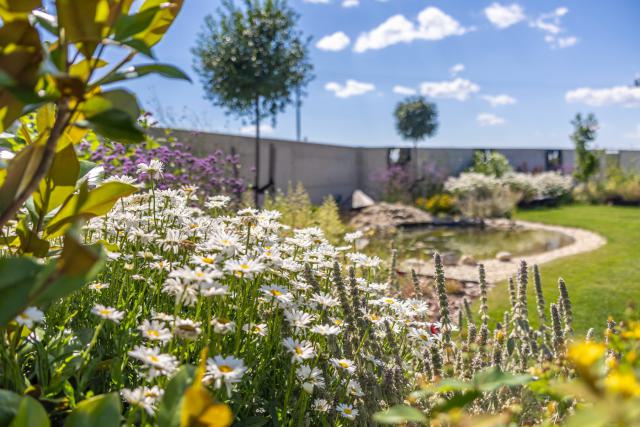
Small garden pond and a flower bed
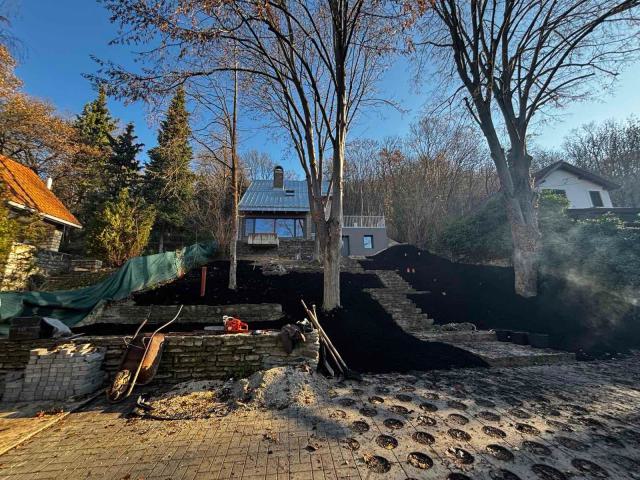
Slope with a retaining wall and regraded ground
We survey where water runs across the plot and where it collects. The answer may be drainage, a soakaway, a surface channel or a reshaped fall, depending on what the soil and surroundings allow.
Compacted, exhausted soil supports neither lawn nor planting. We loosen the soil, spread humus and add nutrients, replacing the soil where needed, and build a stable base under paving.
Ground levels, water flow, soil testing and compaction.
Drainage pipes, channels, inspection chambers and a geotextile bed.
A gravel soakaway trench or chamber that keeps rainwater on site.
Levelling, ground modelling and leading water away from the building.
Replacing the exhausted layer, spreading topsoil and loosening.
A load-bearing base under paving, driveways and stepping stones.
The tell-tale signs are water standing for days after rain, moss in the lawn, damp showing at the base of the building, or bedding washing out at the edge of the driveway. We walk through these points during the survey.
Partly. The work involves machine trenching, but we work only along the line the water takes. We restore and reseed the disturbed strips, and the lawn recovers within a few weeks.
For a soakaway inside the plot handling your own rainwater, usually not, though local rules can differ. Before quoting, we check the regulations that apply in the given municipality.
The technical groundwork is typically 10 to 20 percent of the landscaping cost, and it is what keeps the lawn, the plants and the paving in place. Putting it right afterwards always costs more.